


 Jun 4, 2026
SEO
11 min read
Jun 4, 2026
SEO
11 min readDiscover how the right SEO strategy can help small businesses rank higher on Google, attract local customers, and drive real revenue — without breaking the budget.
Search engine optimization (SEO) refers to the process of improving a website’s visibility on search engines like Google so that potential customers can find it organically — without paid advertising. For small businesses, professional SEO services take this process and make it manageable, affordable, and results-driven.
Unlike large corporations with massive marketing budgets, small businesses need SEO strategies that deliver measurable results efficiently. That’s exactly what a dedicated small business SEO service provider does — focusing on the tactics that truly move the needle: local SEO, on-page optimization, keyword targeting, technical SEO, and link building.
Whether someone runs a bakery, a law firm, a boutique, or a digital agency, investing in SEO services for small businesses is one of the smartest decisions a business owner can make in today’s search-driven marketplace.
A small business that appears on the first page of Google for its target keywords receives, on average, 91.5% of all organic traffic for those terms. Without SEO, that visibility simply doesn’t exist.
Many small business owners still believe SEO is something only enterprise brands need. That couldn’t be further from the truth. In fact, search engine optimization levels the playing field — giving small, local businesses the tools to compete directly against big-budget competitors in their own neighborhoods and niches.
Here is why SEO has become a business necessity:
Unlike paid ads that stop the moment the budget runs out, organic rankings continue driving traffic for months or years.
Local SEO puts small businesses in front of nearby buyers who are actively searching for what they offer.
High Google rankings are associated with credibility. Customers trust businesses they see on page one.
Every click, every ranking, every conversion can be tracked — giving small businesses full visibility into their investment.
Over 60% of searches happen on mobile devices. SEO ensures a business shows up where customers are actually looking.
Good SEO improves site speed, navigation, and content quality — making it better for visitors and search engines alike.
Not all SEO services are created equal. The most effective small business SEO packages focus on a specific set of high-impact strategies that deliver qualified traffic and genuine growth. Here is what a comprehensive SEO service for small businesses typically includes:
Everything begins with understanding what potential customers are actually searching for. A professional SEO agency conducts in-depth keyword research to uncover high-intent, low-competition search terms that a small business can realistically rank for. This includes long-tail keywords, geo-specific phrases, and purchase-intent queries that drive conversions — not just traffic.
On-page SEO involves optimizing the content, headings, meta titles, meta descriptions, image alt text, and internal linking on a website. For small businesses, this means making sure every service page, product listing, and blog post is structured in a way that both search engines and human visitors find clear and valuable.
Local SEO is arguably the most important component for brick-and-mortar businesses and service providers. It includes optimizing a Google Business Profile (formerly Google My Business), building local citations, managing online reviews, and targeting location-specific keywords. When someone searches “best plumber near me” or “SEO services near me,” local SEO is what determines who shows up first.
Businesses with fully optimized Google Business Profiles are 70% more likely to attract location-based visits and 50% more likely to result in a purchase than businesses without one.
Technical SEO ensures that a website is fast, mobile-friendly, crawlable, and free of errors that can prevent Google from indexing it properly. For small businesses using platforms like WordPress, Shopify, or Squarespace, technical SEO issues are more common than many realize — and fixing them can lead to significant ranking improvements.
Search engines reward websites that consistently publish helpful, relevant content. A dedicated SEO content strategy helps small businesses attract organic traffic through informative blog posts, how-to guides, FAQs, and landing pages — all built around the keywords their ideal customers are searching for.
Backlinks — links from other websites pointing to a business’s site — remain one of Google’s strongest ranking signals. Ethical, white-hat link building strategies help small businesses earn authority and trust in the eyes of search engines, improving rankings for competitive keywords over time.
Transparent reporting is a hallmark of quality SEO services for small businesses. Monthly performance reports should cover keyword rankings, organic traffic, bounce rate, conversion tracking, and backlink growth — so business owners can see exactly what their investment is producing.
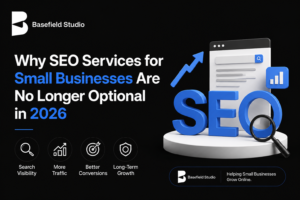
Finding the right SEO partner is critical. Not every agency that claims to offer “affordable SEO for small businesses” actually delivers results. Here are the key things to look for when evaluating SEO service providers:
A trustworthy SEO agency for small businesses will have case studies, testimonials, and verifiable examples of ranking improvements and traffic growth. Before committing, ask for examples of businesses similar in size and industry that they have helped succeed.
Some agencies use manipulative techniques — like buying links, keyword stuffing, or cloaking — that can lead to Google penalties and long-term damage to a website. Always choose an SEO company that uses ethical, sustainable practices aligned with Google’s Webmaster Guidelines.
SEO pricing for small businesses should be clear and straightforward. Whether an agency offers monthly retainers, project-based pricing, or hourly consulting, the scope of work and deliverables should be spelled out in detail. Avoid any provider that cannot explain exactly what they are doing or why.
SEO strategies for a restaurant differ significantly from those for a law firm or an e-commerce store. Look for an SEO company that has experience in the specific industry or niche, as they will better understand the target audience, search behavior, and competitive landscape.
SEO pricing varies widely depending on the scope of services, the competitiveness of the industry, and the geographic market. Here is a general breakdown of what small businesses can expect to invest:
Most small businesses work with SEO agencies on a monthly retainer basis. Entry-level packages for local SEO typically start between $500 and $1,500 per month. Mid-range, comprehensive SEO packages — including content creation, technical SEO, and link building — generally fall in the $1,500 to $5,000 per month range.
A professional SEO audit identifies the current state of a website’s health, keyword performance, and technical issues. These typically range from $300 to $2,000 depending on the size of the website and depth of the audit.
For specific tasks like a new website SEO setup, a local SEO campaign, or an e-commerce SEO overhaul, project-based pricing is common. These projects generally run between $1,000 and $7,500 depending on complexity.
The real question is not how much SEO costs — it is how much potential revenue is being lost every day that a business does not rank on page one. The ROI of SEO consistently outperforms most other marketing channels over a 12-month period.
For businesses that serve a specific city, region, or service area, local SEO is the single most powerful digital marketing tool available. Local search engine optimization focuses on helping businesses appear in Google’s “Local Pack” — those three map listings that appear above organic results for location-based searches.
Ranking in the local pack for searches like “SEO services for small businesses near me” or “[city] digital marketing agency” can generate a consistent stream of high-quality, ready-to-buy leads every single week.
Effective local SEO includes managing consistent Name, Address, and Phone (NAP) data across directories, earning positive customer reviews, building locally relevant backlinks, and creating location-specific service pages on the website.
This is one of the most common questions small business owners ask. The short answer: both have a role, but SEO delivers far greater long-term value.
Paid advertising (Google Ads, Facebook Ads) generates immediate visibility but requires continuous spending. The moment the budget stops, the traffic stops. SEO, on the other hand, builds compounding momentum. Rankings earned today continue driving traffic for months or years — representing a genuine business asset, not a recurring expense.
For small businesses with limited budgets, a strong foundation in SEO — especially local SEO — provides the most sustainable path to long-term online growth. Many business owners find that once their organic rankings kick in, their reliance on paid traffic drops significantly, freeing up marketing budget for other priorities.
Many small businesses unknowingly sabotage their own online visibility. Awareness of these pitfalls is the first step to avoiding them:
Google uses mobile-first indexing, meaning the mobile version of a website is what Google primarily uses to rank it. A site that looks good on desktop but is clunky on a phone will suffer in rankings regardless of how good the content is.
Many small business owners focus on terms like “marketing agency” or “plumber” — keywords that are dominated by massive, national websites. A smarter strategy targets specific, intent-rich long-tail keywords like “affordable plumber in [city]” or “SEO services for small business owners.”
Online reviews directly impact local SEO rankings. Businesses that actively encourage satisfied customers to leave Google reviews consistently outperform competitors in local search results.
Google rewards depth, authority, and originality. Pages with very little content, copied text, or repetitive keyword stuffing are penalized and suppressed in search results. Quality always wins over quantity.
Starting an SEO campaign without auditing the existing website is like building a house on an unknown foundation. A comprehensive SEO audit reveals hidden technical issues, crawl errors, missing metadata, and site speed problems that must be resolved before optimization can succeed.
How long does SEO take to show results for a small business?
SEO is a long-term investment. Most small businesses begin to see noticeable improvements in rankings and traffic within 3 to 6 months of consistent, professional SEO work. Competitive industries or markets may take 6 to 12 months to see significant first-page rankings.
Can a small business do SEO on its own?
Some basic SEO — like optimizing a Google Business Profile or adding relevant keywords to website content — can be done independently. However, comprehensive SEO that delivers meaningful ranking improvements typically requires professional expertise, time, and specialized tools that most small business owners simply do not have readily available.
What is the difference between local SEO and regular SEO?
Regular (national or global) SEO targets a broad audience without geographic restrictions. Local SEO specifically targets customers in a defined geographic area, making it ideal for small businesses that serve a specific city, town, or service region.
Is SEO still worth it in 2026?
Absolutely. Organic search continues to be one of the highest-ROI marketing channels available. With AI-driven search updates, the emphasis on quality, expertise, and local relevance makes professional SEO more valuable — not less — for small businesses in 2026.
What makes a good SEO agency for a small business?
The best SEO agencies for small businesses are transparent, results-focused, and experienced in local SEO. They provide regular reporting, clearly explain their strategies, and adapt their approach based on data — not guesswork.
Stop losing customers to competitors who rank higher on Google. Get a custom SEO strategy built specifically for your small business — and start generating leads that convert.




Comments
Stay Ahead with the Latest Local SEO News: Transform Your Business Visibility - basefieldstudio.com
June 5, 2026[…] highlights changes in how Google ranks businesses in local search results. Unlike traditional SEO, which focuses on broader geographic areas, local search prioritizes proximity, relevance, and […]